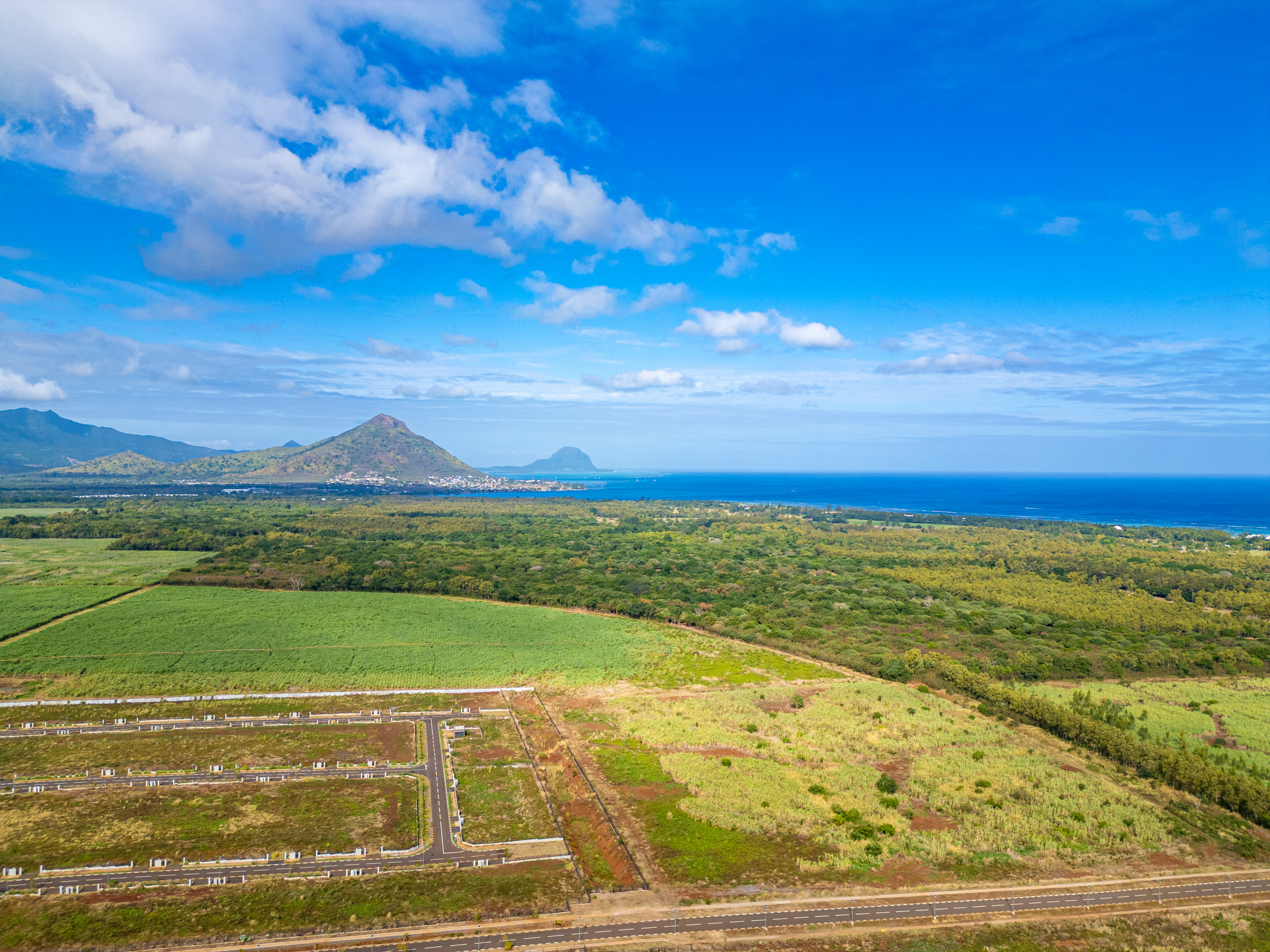
BUYING AN OFF-PLAN PROPERTY IN MAURITIUS
For some, this is a bold leap of faith: putting down capital on a property that cannot yet be walked through. For others, it is one of the most strategic ways to enter the Mauritian property market, whether as a homeowner, an investor, or a foreigner seeking a foothold on the island. Despite the inherent risks, off-plan property has become a cornerstone of real estate in Mauritius—and, for many buyers, it is proving worthwhile.
Early Entry, Lasting Advantage
The first and most compelling advantage in Mauritius mirrors the global trend: price. Developers typically offer significant discounts to early buyers, particularly in high-demand coastal locations such as Grand Baie, Tamarin, Flic en Flac, and Pereybère. The entry price is often lower than what the same property will command upon completion, giving buyers an immediate margin of capital appreciation.
Equally important is choice. Early purchasers in sought-after developments can secure the best-positioned plots—whether a seafront penthouse with panoramic views, a ground-floor apartment with private garden, or a villa on a corner lot for extra privacy. In regions where land availability is limited, such as the north and west coasts, this advantage can be decisive.
Customisation and Quality of Life
Unlike buying a resale home, buying an off-plan property in Mauritius often comes with a measure of personalisation. Developers may allow buyers to choose finishes, colour palettes, or even adjust layouts to suit their lifestyle. For local families, this means shaping a home around their daily routines; for foreign buyers, it can be about creating a retreat that reflects their aesthetic preferences.
This aligns with another selling point: modern efficiency. Many new-builds in Mauritius now integrate solar water heating, improved insulation, and sustainable design features. Therefore, these reflect global expectations and responding to rising energy costs. For homeowners, the benefit is a lower cost of living; for investors, it enhances the appeal to tenants increasingly drawn to environmentally conscious housing.
A Hedge in a Rising Market
Mauritius is a property safe haven in the region, bolstered by political stability, a strong legal framework, and steady foreign interest. Contextually, buying an off-plan property can act as a hedge. The purchase price is locked at contract, even if the market appreciates during the two to three years of construction. By the time the project reaches completion, its value may already have risen, creating instant equity.
For buyers who pay in staged instalments, this can be particularly attractive. Typically, deposits start at around 10%–25%, with further payments tied to construction milestones. This staggered structure allows investors to commit gradually, while still benefiting from market appreciation.
Foreign Buyers and the Lifestyle
Mauritius is unique in the region for the way it has opened its property market to foreign nationals. Under specific schemes, for instance, these are the Integrated Resort Scheme (IRS), Real Estate Scheme (RES), Property Development Scheme (PDS), and more recently, Smart City projects. These allow foreigners to purchase freehold property in designated developments. As such it often comes with the added benefit of permanent residency for purchases above USD 375,000.
For international buyers, buying an off-plan property in Mauritius is particularly attractive. Not only do they offer a chance to enter prestigious lifestyle communities with resort-style amenities, but they also guarantee a modern property aligned with global standards. Investors from Europe, South Africa, and increasingly Asia, are drawn by the combination of tax advantages, quality of life, and the prestige of a Mauritian address.
Rental Demand and Tourism Synergy
Mauritius’s reputation as a luxury tourism destination feeds directly into rental demand. Villas and apartments in well-located developments often double as lucrative short-term rentals when owners are away. New-builds with modern amenities—beach access, private pools, fitness centres—are especially attractive to this segment.
For long-term tenants, particularly expatriates working in the financial services or technology sectors, the appeal of new builds is equally strong. With the government encouraging foreign talent and investment, demand for modern housing stock continues to expand. Off-plan investors who secure a unit at pre-construction prices are in a good position to benefit from this steady rental market.
The Risks in the Mauritian Context
Yet, it would be misleading to consider buying an off-plan property in Mauritius as a guaranteed win. Buyers face risks familiar in other markets, but amplified by the island’s geography and economy.
Construction delays are not uncommon, whether due to supply chain disruptions, weather conditions, or regulatory approvals. In rare but notable cases, projects have stalled entirely, leaving buyers in limbo.
Currency fluctuations add another layer of complexity. This is especially, for foreign investors purchasing in Mauritian rupees while earning in euros, dollars, or rand. Exchange rate volatility can shift the effective cost of instalments significantly.
Finally, the risk of overpaying exists. If global property markets cool, or if supply outpaces demand in certain regions, buyers may find their off-plan purchase valued lower than anticipated on completion.
Mitigating the Risks
Mitigation begins with choosing the right developer. In Mauritius, reputation matters enormously. Established names with completed projects to their credit are generally safer bets than newcomers. Buyers should seek developments where there is a transfer of deposits into escrow accounts. The releases happen only in line with construction progress.
Legal due diligence is non-negotiable. Independent legal counsel ensures contracts are watertight, covering everything from delivery timelines to penalties for non-completion. The legal framework in Mauritius is robust, but it still requires buyers to be vigilant.
For foreign investors, working with licensed real estate agencies—regulated by the Financial Intelligence Unit (FIU)—adds another layer of protection. These agencies are required to uphold professional standards. And they also provide guidance on both the property itself and the broader investment implications.
Why It Works in Mauritius
Ultimately, the off-plan market in Mauritius thrives because it aligns with the island’s larger ambitions. Land is finite. And, demand from both locals and foreigners is strong. The government actively promotes real estate as a pillar of economic growth. Buying off-plan is not merely a way to secure a property. Basically, it is participation in the ongoing transformation of Mauritius into a lifestyle hub for the region and beyond.
For Mauritians, it provides access to modern housing stock in a competitive market. For foreigners, it offers a chance to secure a home in paradise, often with the added benefit of residency. For both, it can deliver financial gains alongside lifestyle rewards.
Brief
Buying an off-plan property in Mauritius is not without its risks, but nor is it the speculative gamble some suggest. It is a calculated move—one that requires due diligence, financial discipline, and trust in reputable partners. When we meet those conditions, the rewards can be substantial: capital appreciation, rental income, and the lifestyle premium that comes with owning a piece of Mauritius.
In a world where real estate markets often feel uncertain, Mauritius offers something distinctive: an island with limited land, consistent demand, and a clear vision of its future. For those willing to buy before the bricks are laid, off-plan remains one of the most worthwhile paths to securing a stake in that vision.


